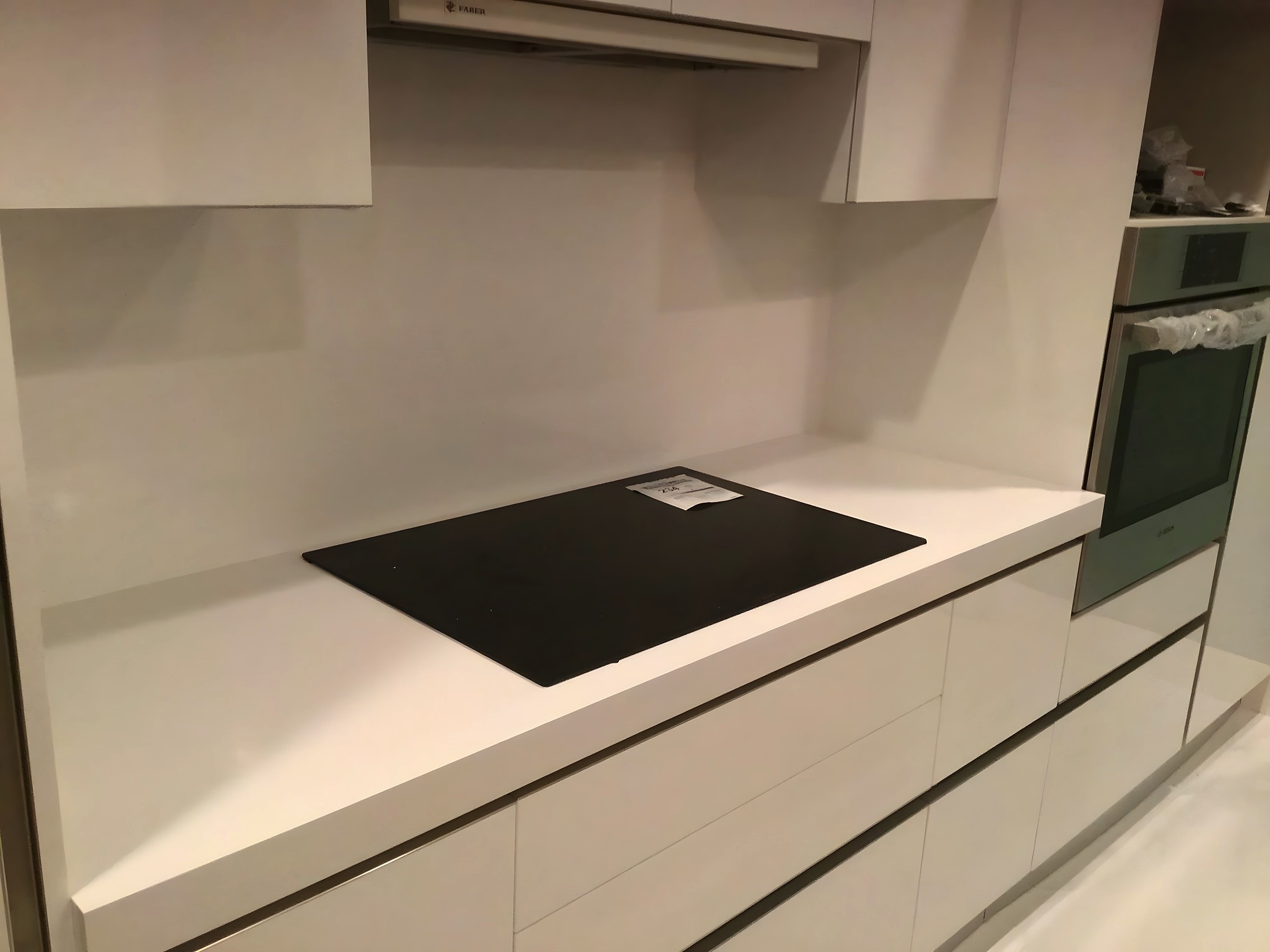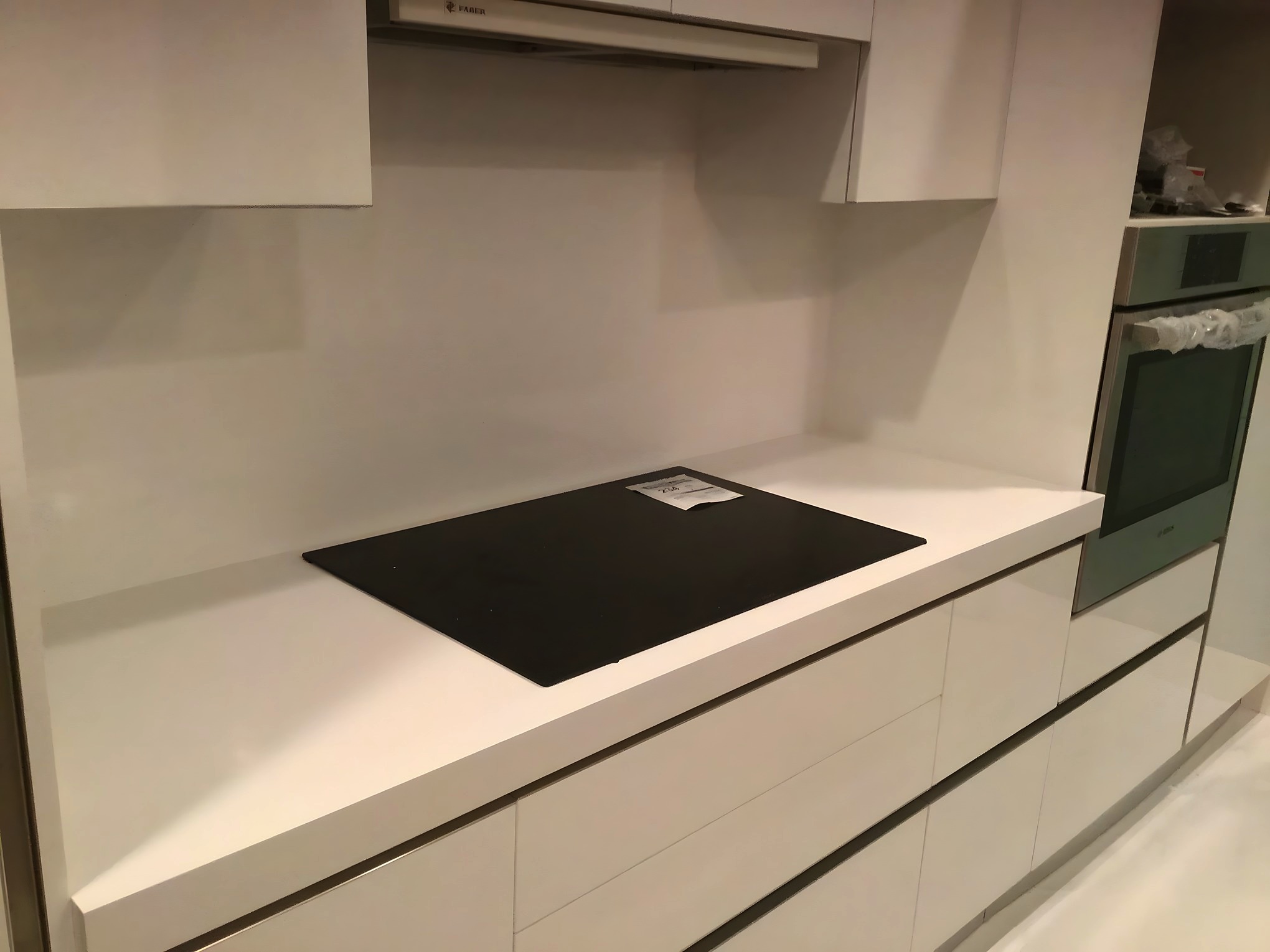
One of the most common questions we hear from homeowners isn't about stone durability or maintenance schedules — it's about design: how to match countertops with cabinets and backsplash so the whole kitchen feels cohesive. It's a real concern, because a kitchen is one of the few rooms where three major surface materials meet in tight proximity, and the wrong combination can make even expensive materials look off.
The good news is that matching these three elements isn't about having a designer's eye or an art degree. It follows reliable rules that work every time. After 25+ years of helping South Florida homeowners coordinate their kitchen surfaces — over 1,000 projects across Miami, Hialeah, Fort Lauderdale, and Coral Gables — here are the principles we rely on.
The Selection Order: Cabinets First, Countertop Second, Backsplash Last
Before we talk about color theory or pattern matching, the most practical advice we can give is this: choose your materials in the right order.
- Cabinets first. Cabinets are the largest visual surface in your kitchen. They set the tone for everything else. They're also the hardest to change later
- Countertop second. Your countertop material should complement the cabinets — not compete with them. Because stone comes in thousands of colors and patterns, you'll have far more flexibility here than you did with cabinets
- Backsplash last. The backsplash ties the other two together. It's the smallest surface area, the easiest to change, and the most flexible in terms of material, color, and pattern options
We see homeowners get into trouble when they fall in love with a specific slab first and then try to find cabinets and backsplash to match it. It can work, but it's significantly harder — you've locked in your statement piece before establishing the foundation.
If you've already chosen your stone and need to work backward, call us at (786) 468-5078 and we'll help you figure out the best cabinet and backsplash direction. We do this regularly and we're happy to advise.
The "One Star" Rule
This is the single most reliable design principle for kitchen surfaces, and it applies to every style from farmhouse to ultra-modern:
Only one element gets to be the star. The other two play supporting roles.
What does this mean in practice?
- Bold countertop (the star) + simple cabinets + subtle backsplash. Example: dramatic Calacatta marble with heavy veining on white shaker cabinets with a plain white subway tile backsplash. The marble is the star
- Bold backsplash (the star) + simple cabinets + quiet countertop. Example: hand-painted Moroccan tile backsplash with white cabinets and a solid-color quartz countertop. The tile is the star
- Bold cabinets (the star) + quiet countertop + simple backsplash. Example: deep navy blue cabinets with a white quartz countertop and a white or light gray backsplash. The cabinets are the star
When two or three elements compete for attention — busy granite countertop, patterned backsplash tile, and stained wood cabinets with visible grain — the kitchen feels chaotic, even if each material is beautiful on its own. Restraint is what makes a kitchen feel designed rather than decorated.
Warm vs. Cool: Pick a Lane
Every material in your kitchen leans either warm or cool, and mixing the two carelessly is one of the most common design mistakes we see.
Warm-Toned Kitchens
- Cabinet colors: cream, honey oak, walnut, warm gray, beige, warm white (think Benjamin Moore White Dove or Swiss Coffee)
- Countertop stones: golden granites, warm-veined marbles, quartz with beige or gold undertones
- Backsplash: travertine, warm-toned ceramic, creamy subway tile
Cool-Toned Kitchens
- Cabinet colors: bright white, gray, charcoal, blue, green, cool white (think Benjamin Moore Chantilly Lace or Simply White)
- Countertop stones: blue-gray granites, cool-veined marbles, pure white or gray quartz
- Backsplash: white marble mosaic, gray glass tile, cool-toned ceramic
Can You Mix Warm and Cool?
Yes, but carefully. The key is to establish a dominant temperature (warm or cool) and introduce the opposite as a deliberate accent — not a competing element. For example, a predominantly cool kitchen (white cabinets, gray quartz) can handle warm-toned brass hardware and a warm wood island without feeling disjointed. But if the countertop is warm and the cabinets are cool and the backsplash is warm, the kitchen will feel undecided.
When in doubt, stay in one temperature family. You can't go wrong with consistency.
Matching Strategies by Cabinet Color
Here are the combinations we install most frequently in South Florida kitchens, along with why they work:
White Cabinets
White cabinets are the most versatile — they pair with virtually any countertop material. Our most popular combinations:
- White cabinets + white marble or marble-look quartz + white subway tile backsplash. The classic. Timeless, bright, and clean. The veining in the marble provides all the visual interest you need
- White cabinets + dark granite or quartz + light backsplash. High contrast. Modern and dramatic. Works especially well in kitchens with abundant natural light
- White cabinets + warm-veined quartzite + neutral backsplash. A middle ground — natural stone character without going dark
Gray Cabinets
Gray is the second most popular cabinet color in our Miami and Fort Lauderdale projects. The key is matching the gray undertone:
- Cool gray cabinets pair best with cool countertops — white quartz, Carrara marble, or blue-gray granite
- Warm gray cabinets pair best with warm countertops — creamy quartz, warm marble, or golden granite
- Avoid pairing gray cabinets with a gray countertop in the same value (lightness/darkness) — they'll blur together instead of complementing each other. Create contrast: light gray cabinets with darker countertop, or dark gray cabinets with lighter countertop
Dark Cabinets (Espresso, Navy, Black)
Dark cabinets need a countertop that provides contrast and light:
- Dark cabinets + light countertop is almost always the right move. White or cream quartz, light marble, or a light-veined quartzite opens up the space
- Dark cabinets + dark countertop can work in large kitchens with excellent lighting, but it makes smaller kitchens feel like caves. In South Florida condos, we usually steer clients away from dark-on-dark unless the space can handle it
Natural Wood Cabinets
Wood grain adds warmth and texture, so the countertop should be relatively simple:
- Light wood (maple, birch, white oak) pairs well with white or light gray quartz, or a subtle marble
- Dark wood (walnut, cherry) pairs well with lighter countertops that create contrast. Avoid busy granite patterns — the wood grain plus busy stone becomes too much visual noise
Backsplash: The Bridge Between Cabinets and Countertop
The backsplash's job is to connect the countertop and cabinets visually. Here's how to make that connection:
Pull a Color From the Countertop
The easiest technique: find a secondary color in your countertop's pattern and use that as the primary color of your backsplash. If your granite has flecks of gold, consider a warm-toned backsplash. If your marble has gray veining, a gray or silver backsplash tile creates cohesion.
Match the Countertop Material
Using the same stone for both the countertop and a short backsplash (typically 4 to 6 inches) is clean and seamless. We fabricate matching stone backsplashes for many of our kitchen projects. This works particularly well with quartz and with marble that has consistent veining.
Contrast Intentionally
If your countertop and cabinets are both neutral and you want the backsplash to be the star (remember the One Star Rule), this is where you can go bold: colored glass tile, patterned cement tile, or a dramatic natural stone mosaic.
Keep Scale in Mind
Large-format backsplash tiles (12x24, for example) create a modern, clean look. Small mosaics create texture and visual complexity. Match the scale to your kitchen's style — and remember that smaller tiles mean more grout lines to maintain, which matters in Florida's humid climate.
Common Mistakes to Avoid
We see these errors regularly, and they're all preventable:
- Matching too exactly. Your countertop, cabinets, and backsplash should coordinate — not match identically. A kitchen where everything is the same beige feels flat. Introduce variation in shade, texture, or material
- Choosing materials under store lighting. Fluorescent showroom lights distort color. Always bring samples home and view them in your kitchen's actual lighting — both natural daylight and your installed fixtures, at different times of day
- Ignoring the floor. Your kitchen floor is another major surface that affects the overall palette. We focus on the cabinet-countertop-backsplash relationship, but don't forget the floor is part of the composition
- Following trends too literally. Trends change every 3-5 years. Countertops last 20-30 years. If a trend appeals to you, interpret it in a way that won't feel dated in a decade. Classic combinations — white and gray, wood and white, dark and light — endure because they work
How We Help With Material Selection
Choosing materials from photos and samples can feel abstract. That's why we invite every client to our slab yard to see full-size slabs in person. A 4-inch sample chip can't show you how a stone's veining will flow across an 8-foot island — but standing in front of the actual slab can.
We also bring material samples to your home when it's helpful, so you can see how a stone looks against your actual cabinets, your actual floor, and your actual lighting.
If you're in the design phase and want guidance on how to coordinate your surfaces, request an estimate and let us know where you are in the process. Whether you've already chosen cabinets or you're starting from scratch, we're happy to help you build a cohesive material palette.
Call (786) 468-5078 or visit our stone selection page to start exploring your options. We've helped homeowners across Coral Gables, Miami, and Fort Lauderdale create kitchens that look intentional and feel like home.