What Is a Mitered Edge on a Countertop?
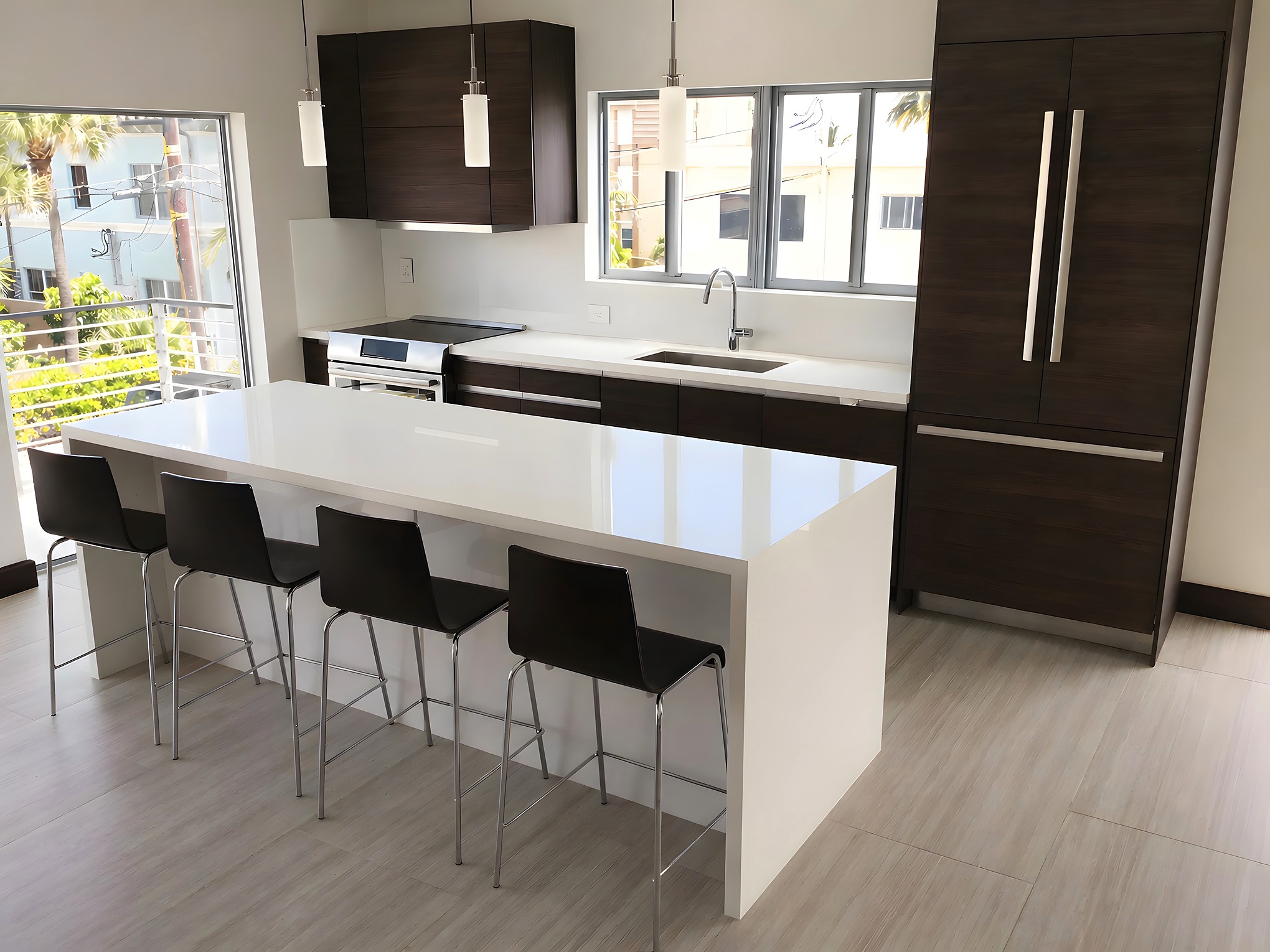
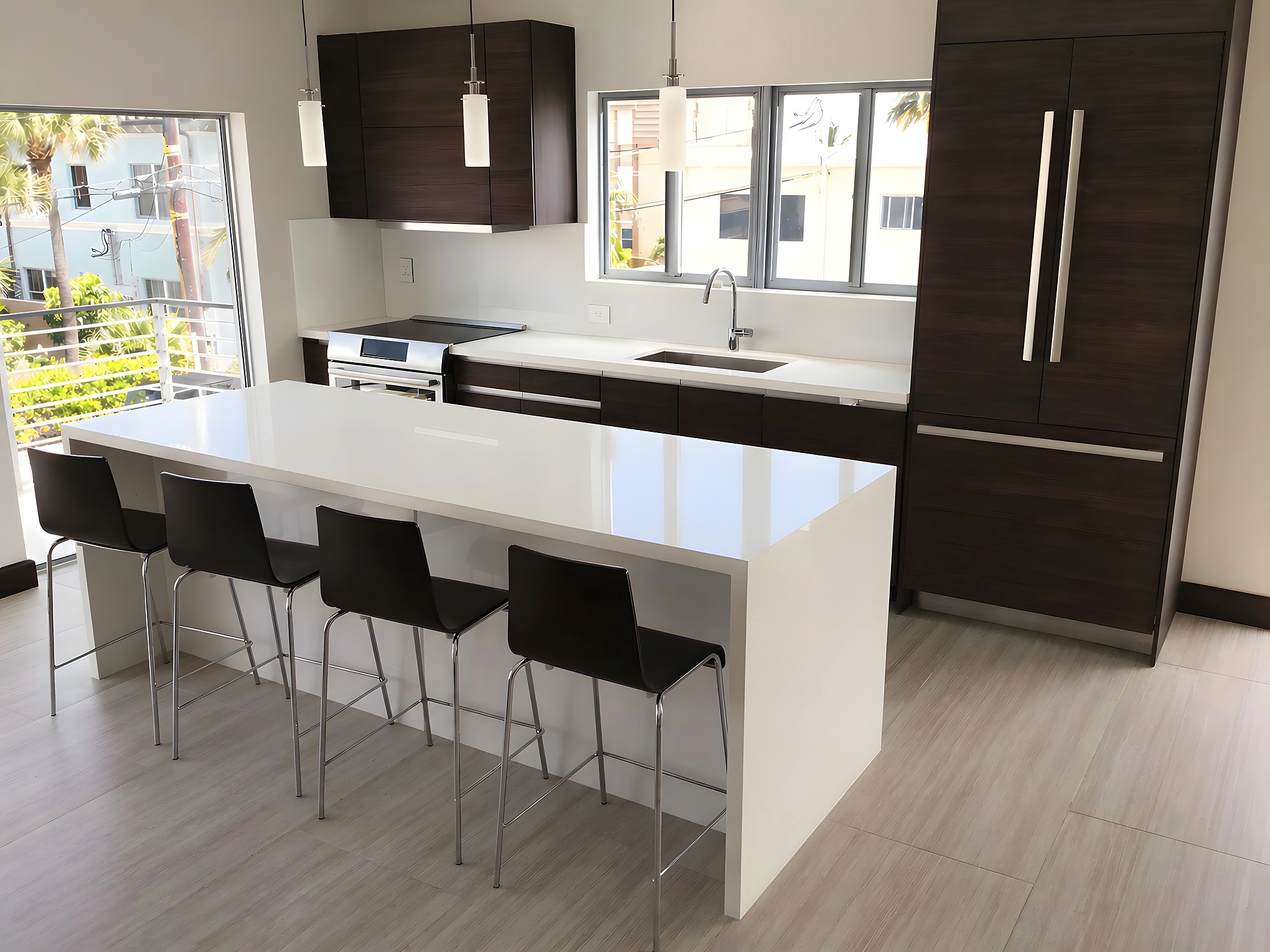
A mitered edge is a fabrication technique where two pieces of stone are cut at matching 45-degree angles and bonded together. The result looks like a single, thick slab of stone — typically 3 to 4 inches thick — without the extreme weight or cost of cutting from a solid block.
If you've seen a sleek waterfall island in a magazine or a kitchen with countertops that look impossibly thick and seamless, chances are you were looking at a mitered edge.
How It's Made
The process requires precision:
- Two pieces are cut from the same slab at exactly 45 degrees
- Veining is matched so the pattern flows continuously across the joint
- The pieces are bonded with color-matched adhesive
- The joint is polished until it's nearly invisible
This is skilled fabrication work. A poorly done miter shows a visible seam, mismatched veining, or — worst case — separates over time. That's why choosing an experienced fabricator matters.
At Becca Proworks, we've been doing mitered edges for over 25 years. Every miter is precision-cut and matched at our Hialeah warehouse, then bonded either in-shop or on-site depending on the material and job conditions.
Where Mitered Edges Look Best
Kitchen Islands
This is the most popular application. A mitered edge on a kitchen island — especially a waterfall island where the stone wraps down the sides to the floor — creates a dramatic focal point. It turns a functional surface into a piece of furniture.
Perimeter Countertops
Adding a mitered edge to your standard kitchen countertops gives them a built-in, substantial feel. Instead of a standard 1.25-inch edge, you get a 3- or 4-inch profile that makes the entire kitchen look more custom.
Bathroom Vanities
Mitered edges pair perfectly with modern floating vanities. The thick stone profile adds visual weight and balances the airiness of a wall-mounted cabinet.
Commercial Installations
Reception desks, restaurant bar tops, conference tables, and hotel lobbies all benefit from the substantial look of mitered stone. It communicates quality without saying a word.
Mitered Edge vs. Other Edge Profiles
| Edge Style | Look | Cost | Best For |
|---|---|---|---|
| Standard eased | Simple, thin | $ | Budget-friendly kitchens |
| Bullnose | Rounded, classic | $ | Traditional kitchens |
| Ogee | Ornate, curved | $$ | Traditional/formal |
| Beveled | Angled top edge | $$ | Transitional kitchens |
| Mitered | Thick, modern | $$$ | Modern, waterfall, high-end |
| Laminated | Stacked layers visible | $$ | Thick look, less seamless |
The mitered edge costs more than a standard edge because it uses more material and requires more labor. But compared to buying a true 3-inch solid slab (if you can even find one), it's far more practical and affordable.
What Does a Mitered Edge Cost?
Mitered edge pricing depends on:
- Stone type — quartz and granite are the most common; marble and quartzite work too
- Linear footage — how much edge needs the miter treatment
- Complexity — a simple front edge costs less than a full waterfall that wraps to the floor
- Veining — book-matching veins across a miter requires careful slab selection
As a rough guide, expect to add $30–$60 per linear foot on top of your base countertop price for mitered edge fabrication. A waterfall island with mitered edges on both sides might add $800–$2,000 depending on size and stone.
We include mitered edge pricing in every free estimate — just tell us what you're envisioning and we'll break it down.
Which Stones Work Best for Mitered Edges?
Quartz is the easiest to work with — consistent color, no veining to match, and strong bond joints. If you want a clean, modern look, quartz with a mitered edge is hard to beat.
Granite works well, especially for solid colors or stones with subtle movement. Busy granites can be harder to vein-match across the miter.
Quartzite is increasingly popular for mitered edges. Stones like Taj Mahal or Calacatta quartzite have beautiful veining that looks stunning when book-matched across a waterfall.
Marble is gorgeous but requires more care. Calacatta and Statuario marble with mitered waterfall edges are some of the most dramatic kitchen designs you'll see — just be aware of marble's maintenance needs in South Florida's humidity.
Tips for Getting the Best Mitered Edge
- Choose your fabricator carefully — mitered edges expose the skill level of whoever cuts your stone. Ask to see examples of their miter work.
- Visit the slab yard — if veining matters to you (and it should for marble or quartzite), pick your slab in person so you can see how the veins will flow across the miter.
- Consider book-matching — for waterfall islands, book-matched slabs create a mirror-image pattern across the joint that looks intentional and high-end.
- Think about edge thickness — 3 inches is the most popular, but 4-inch and even 6-inch miters are possible for a bolder statement.
Ready for Mitered Edge Countertops?
If you're building or renovating in South Florida, Becca Proworks fabricates and installs mitered edge countertops in granite, quartz, quartzite, and marble. Visit our Hialeah warehouse to hand-pick your slab, and we'll handle everything from templating to installation.
Check out our mitered edge countertops service page for more details, get a free estimate, or call us at (786) 468-5078.